


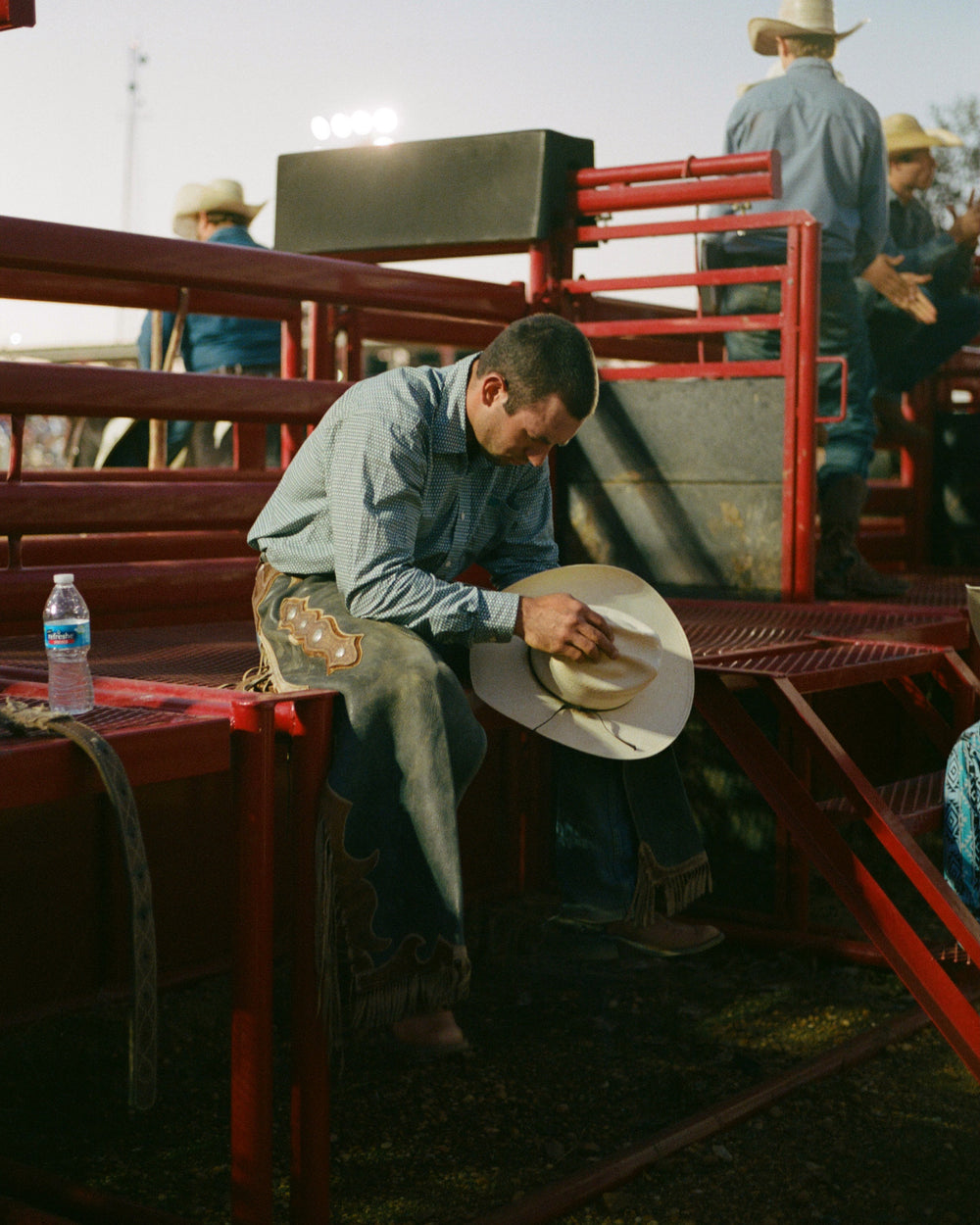


RODEO ARENAS
Everything in the arena.
WW's design team works with professional cowboys, stock contractors, and arena managers on a daily basis. That's not a marketing line — it's how WW developed the roping chute that professional associations used to write the industry specifications. When you build a WW arena, you're getting equipment shaped by people who have spent careers understanding what happens when the gate opens.
A complete WW rodeo arena is made up of several distinct systems that work together. Here's how it fits:
THE OUTER ARENA
The outer arena fence — everything the audience sees and that contains the action — is built from WW Classic panels and gates. Classic panels are 5 feet tall, mounting 6 feet high between posts, fabricated from 2" 14-gauge structural round tubing meeting ASTM A-513 standards. The same panel line that WW sells to commercial cattlemen. The selling point to ranchers is that their panels are heavy enough for rodeo. The selling point to arena operators is that their rodeo panels are the same proven product that handles rough stock daily on working ranches.
Outer arena configuration varies by venue size, event mix, and site constraints. WW's design team works with you to spec the right panel counts, gate placements, and ride-through configurations for your layout — permanent or portable.
THE BACK PENS
The back pens — the holding and staging areas behind the bucking chutes for rough stock bulls and horses — are the single largest panel cost in most arena builds, and the area most buyers underestimate going in.
For permanent installations, back pens are built with Classic panels. For portable arenas that move from event to event, some operators use Chaparral panels paired with 14-gauge Chaparral-style gates — the gates carry the same strength as Classic but the self-contained J-leg (optional) design eliminates connecting posts, cutting setup and teardown time significantly when you're moving the arena regularly.
Timed event areas — the pens and alleyways behind the roping boxes and roping chute — follow the same logic. Classic for permanent, Chaparral hybrid for portable.
THE BUCKING CHUTES
America's #1 bucking chute. Used for both bulls and bucking horses — the same unit handles both events.
WW bucking chutes are built as complete assembled units over steel skid bases, not pin-together panels. You choose your section count (typically two to six) and delivery direction — left hand, right hand, or a balanced set of both. Most serious venues run both, because some animals perform better turning out to one side. Standard configuration today is three lefts and three rights; major events run more.
Every chute comes standard with rolling door safety pads and nearly unbreakable plumber. Full 4' metal catwalk decking standard; 2' and 4' folding catwalks available for portable installations.
THE ROPING CHUTES & ARROW PEN
Three roping chute configurations cover every application from professional sanctioned rodeo to practice facility. The Rodeo Roping Chute is the actual chute used to establish professional association specifications — every WW roping chute still meets or exceeds those standards today.
The Arrow Pen feeds directly into the roping chute, keeping it loaded continuously with no break in the action and eliminating the need for pre-sorting. For any timed event operation running volume, this is the add-on that makes the difference between smooth production and lost time.
DESIGN SUPPORT
WW's staff works with professional cowboys and rodeo operations daily to design arena configurations that actually work — not layouts that look right on paper but create problems on event day. Whether you're building a new permanent facility, upgrading an existing arena, or speccing a portable setup that moves from fairground to fairground, WW can help you design the full system before you order a single panel.
Custom color is available on all WW rodeo equipment. Many venues match arena equipment to their sponsorship colors or facility branding.